Culture
After Midnight.
Athens doesn't begin until midnight. What happens between then and dawn is the city's real social life — and it runs on rules no one wrote down.
The dinner reservation is for nine. This is itself a late concession to foreign visitors. Among Athenians, nine o'clock is when you shower.
Athens operates on a schedule that makes no sense until you understand where it came from. This is a city that was, for most of its inhabited history, extremely hot. The human body does not want to move between midday and sundown from June to September. What the body wants is to sleep. The siesta is not a romantic tradition; it is a practical adaptation to a climate that would otherwise be impossible. And the corollary of sleeping in the afternoon is that you are awake in the evening, and the evening in Athens extends until two or three or five in the morning without anyone treating this as unusual.
The structure of the Athenian night is something a visitor apprehends slowly, usually over multiple trips. The first time you notice that the restaurant fills properly at eleven. The second time you understand that the dinner is not a precursor to the evening — it is the beginning of it. The third time you stop being surprised when someone suggests moving at one in the morning, and moving means going somewhere else, and somewhere else is full.
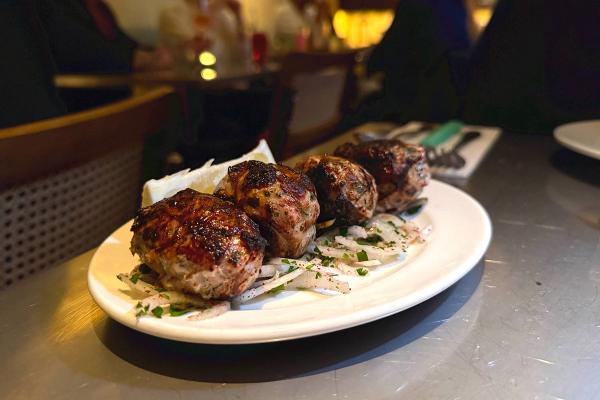
What happens in the middle of the Athenian night is not debauchery, or at least not primarily. It is conversation. The specific social technology of the mezedes table — small plates, shared, replenished, no one asking for the bill — was designed to keep people in one place for a long time. You do not finish a course and move to the next. You graze, you drink, you talk, someone orders more bread, the wine comes again. The table is engineered to keep the night open-ended.
The Athenian relationship to hospitality explains some of this. In Athens, when you visit someone's home, you become part of the household. This is not metaphorical. The guest is offered food, then more food, then a tour of the kitchen to see what else is available. The same logic extends into the restaurant, the bar, the casual gathering. The host's job is to keep the night from ending.
Around midnight the geography of the evening shifts. Some people leave for bars. In Athens, this means a change of room, not a change of company. The same group that had dinner on Apostolou Pavlou often ends up in a rooftop bar in Monastiraki an hour later, having somehow been joined by people who weren't at dinner. The Athenian night is porous — it absorbs people on the way, loses others, reconstitutes itself in different configurations at different locations across the city.
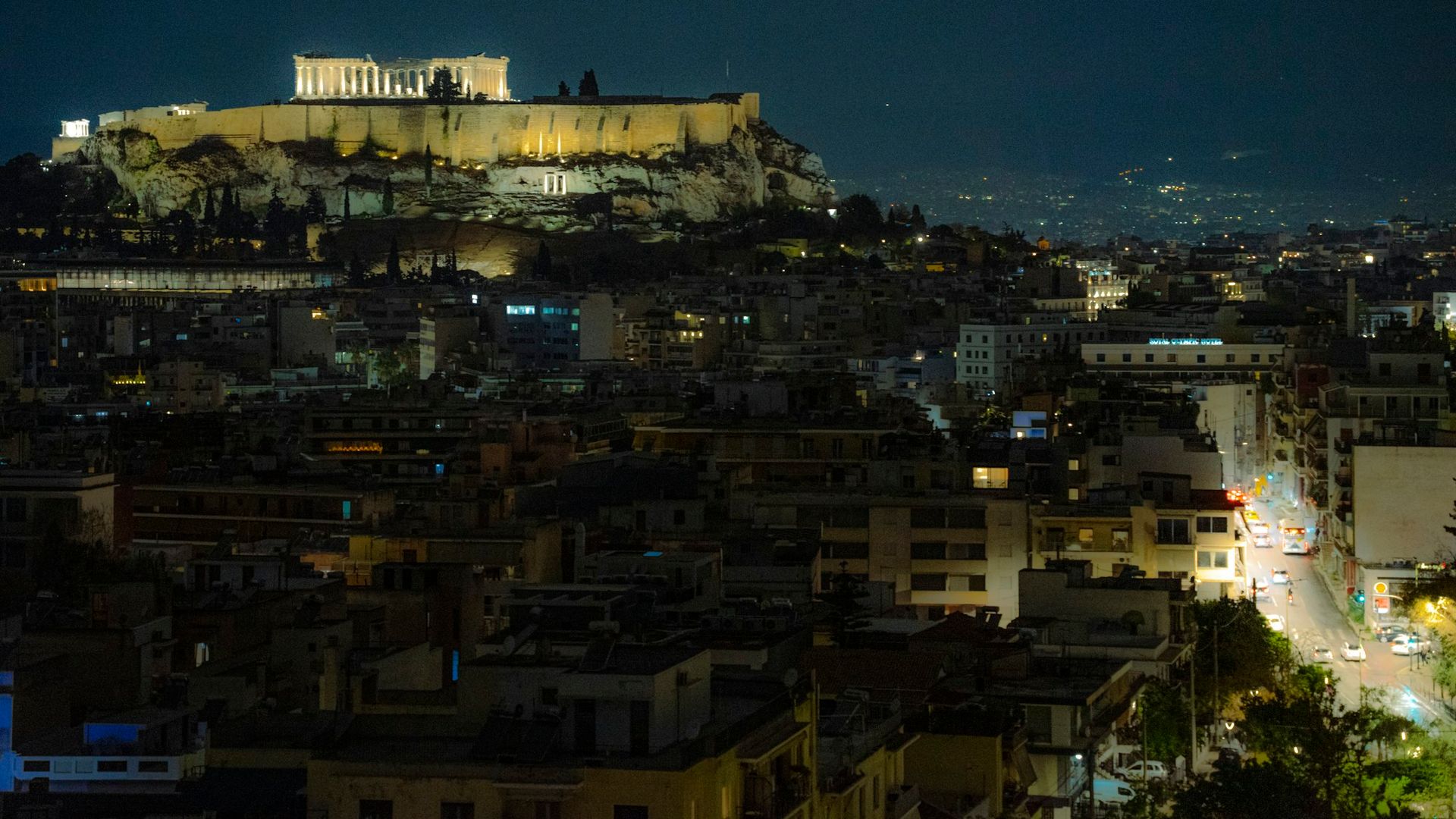
The rooftop is the Athenian night's natural habitat. Every building in Athens is six storeys and every sixth floor has a terrace and every terrace in summer is a room. The view is sometimes the Acropolis, sometimes a courtyard, sometimes other rooftops. What matters is the upward movement, the slight separation from the street, the capacity to feel the city without being consumed by it.
By two in the morning the bars are full in the most functional sense — loud, close, not designed for the kind of conversation you were having an hour ago. Athenians solve this by retreating to a quieter place nearby, or by staying on the rooftop and sending someone for bottles, or by finding the one table outside that is somehow still available. The night continues to be improvised.
What cannot be exported from all of this is the pace. Other cities have late nights. What Athens has that other cities don't is a deep structural tolerance for the unscheduled. The Athenian is not anxious about what comes next, because what comes next will present itself. The city will provide a second option, a third, a fourth. There are always more people coming, more places opening, more evenings that have not yet decided what they are.
You can arrive in Athens intending to have a quiet dinner and be home by midnight. It is a reasonable plan. It is a plan that Athens will not enforce.