Architecture
Dig Anywhere. Find Everything..
Athens is trying to build a metro. The problem is Athens keeps finding itself in the way.
Line 4 of the Athens Metro has been under construction since 2021. Budget: €1.8 billion. Expected completion: somewhere between 2029 and 2032, depending on what they find.
That qualifier is doing a lot of work.
The tunnel boring machines are moving through Kypseli, Exarchia, Zografou. Up to twenty metres on a good day. On a less good day, the drill hits something, the archaeologists come in, the machine stops. The find is logged, excavated, documented. A decision is made: preserve it, relocate it, display it, or note it and continue. The timeline moves accordingly.
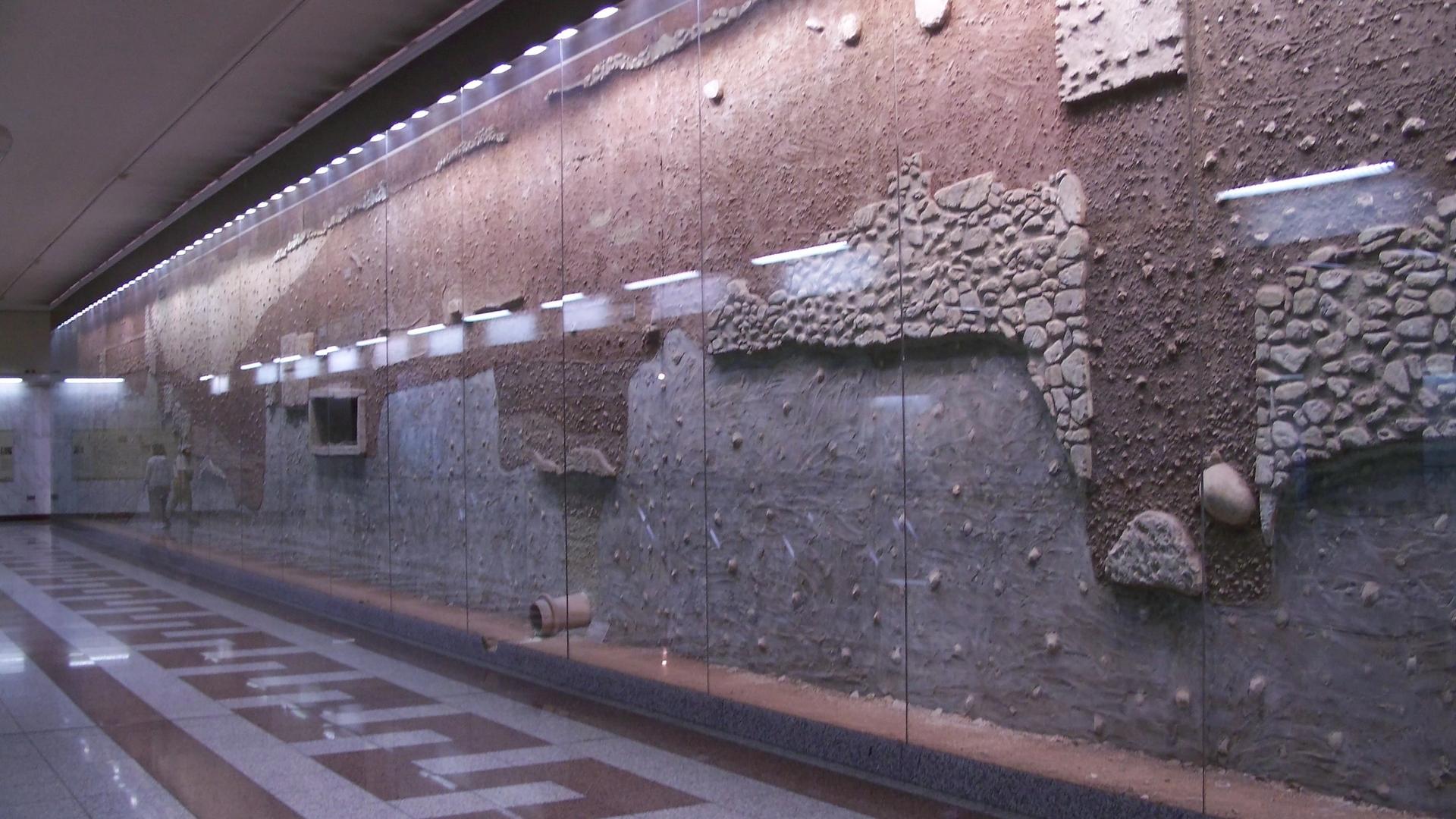
This is not new. When Athens built Lines 2 and 3 in the 1990s, construction uncovered an estimated fifty thousand artefacts — coins, oil lamps, pottery, tools, human remains, an ancient cemetery running directly beneath Syntagma Square. The station at Syntagma was redesigned around what the drills found. It opened in 2000 as part transit hub, part museum: glass cases along the mezzanine hold the artefacts in place. Commuters walk past a Byzantine cistern and the skeleton of a young woman who died in the 4th century BC, still lying in her original tomb position, behind glass, between visible layers of soil. Nobody seems to find this strange anymore.
Line 4's first significant find came in late 2024, near Panepistimioupoli. An ancient road — Classical to Roman in date, wide enough to take a cart — running directly across the planned tunnel alignment. It was the first Line 4 discovery designated for full preservation and relocation rather than documentation alone. That process takes time. Time that doesn't appear in the original contract.
Athens sits on the densest concentration of classical antiquity in Europe. The city has been continuously inhabited for four thousand years. There is no viable underground route that doesn't eventually cross something older. The engineers know this. The archaeologists know this. The contract accounts for it. The schedule does not.
The result is a city in permanent negotiation with its own past. Every push to modernise runs into the evidence of why modernising here matters. You are digging beneath the thing you are trying to reach.
The metro will open. The finds will outlast it.
In the meantime, the bus is on time more often than you'd think.