Architecture
The Polykatoikia Moment.
The concrete apartment block that embarrassed Athens for half a century is now its most interesting design brief.
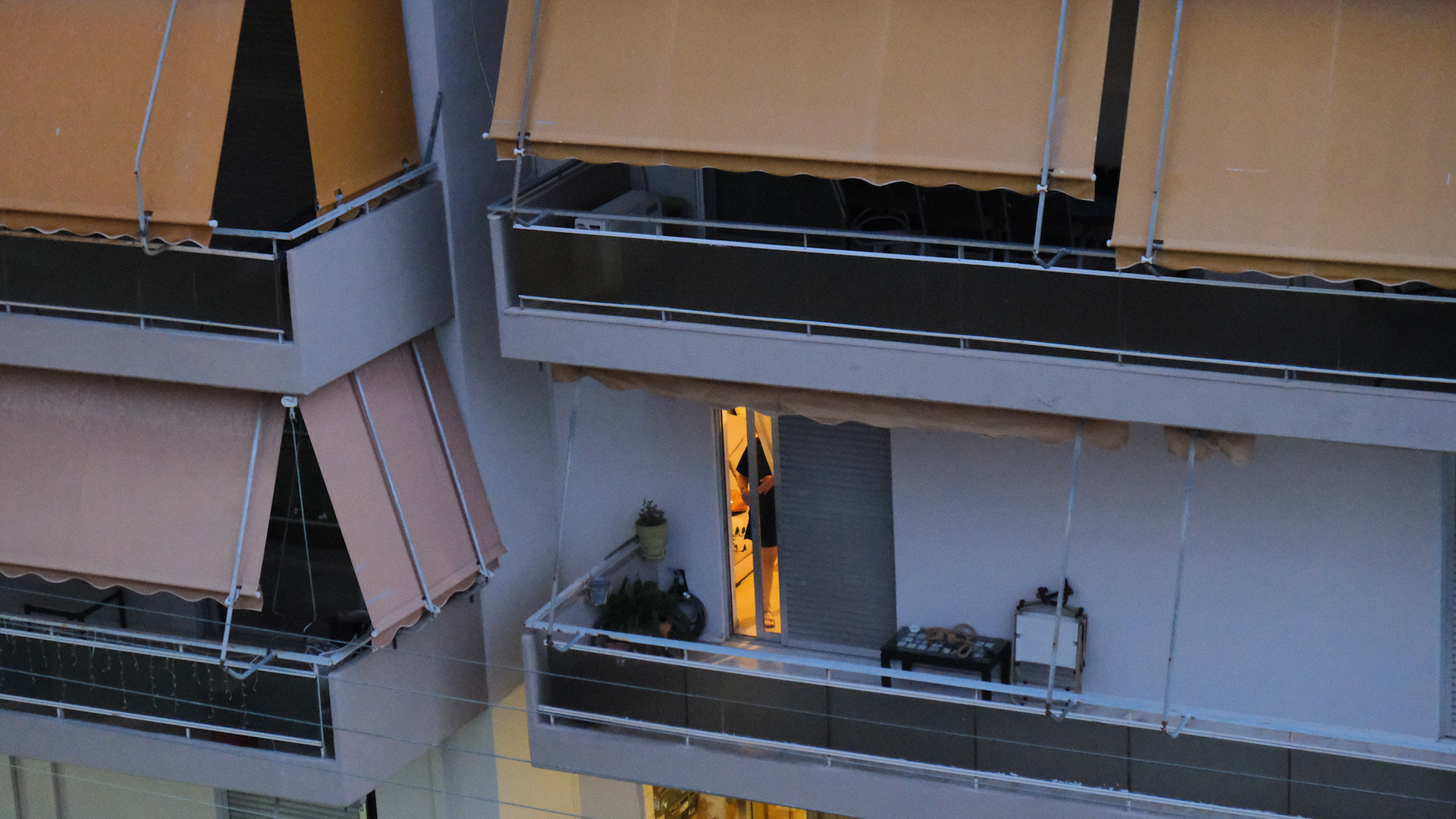
There is a building on almost every corner of Athens that you have already decided to ignore. Concrete frame, small balconies, a ground floor that has been a pharmacy, a dry cleaner, a mobile phone shop, and is currently vacant. Five or six storeys. Built sometime between 1955 and 1975. A polykatoikia.
Athens has approximately 200,000 of them.
The antiparochi system that produced them was a remarkable piece of improvisation. Greece emerged from the Second World War and a subsequent civil war with a housing crisis and almost no capital. The government's solution was elegant in its way: landowners would hand their plot to a developer; the developer would build; everyone would split the resulting apartments. No money changed hands. Athens was rebuilt in two decades through a vast informal partnership between land and labour, and the result was this: a city of concrete.
For most of the late twentieth century, Athens was ashamed of what it had built. The polykatoikia was everything the tourist brochures didn't show — dense, unornamented, utilitarian, a monument to speed over beauty. Architects trained in Europe or America would return and find the city visually incoherent, as if someone had knocked down a neoclassical capital and replaced it with a car park.
What has changed is the angle of looking.
The architects who are working in Athens now — many of them returning from practices in Copenhagen, Brussels, London — have started to see the polykatoikia differently. The ceiling heights are generous by contemporary standards. The concrete frames, rough and honest, are what expensive renovations in other cities spend enormous sums trying to fabricate. The irregular plans that result from odd-shaped plots turn out to produce rooms of unexpected quality — the diagonal wall, the double aspect, the deep reveal.
More importantly, the polykatoikia sits where it matters. It is on the corner of Kolonaki that everyone wants. It is the building behind the Acropolis. It is the address in Koukaki that the rental algorithms have already discovered. You cannot build there again — the land is taken — and so the polykatoikia, which seemed like a consolation prize, turns out to be the prize.
The first wave of this rethinking was interiors. Peeling back the dropped ceilings and the cheap cladding of the 1990s renovations to find the original structure underneath. Raw concrete walls that had been plastered over because they looked unfinished now look deliberate, because taste has shifted and concrete has, in the intervening decades, acquired aesthetic legitimacy.
The second wave is more interesting: the polykatoikia itself as subject. A new generation of Greek architects is treating the building type not as a problem to be disguised but as a vocabulary to be extended. What does it mean to add to a polykatoikia rather than conceal it? What does the balcony become when it is taken seriously as a room? What does the ground floor — the promiscuous commercial base that has held every kind of business — become when it is treated as a civic space?
These are not merely architectural questions. The polykatoikia is where Athens actually lives. Not in the neoclassical buildings on the postcard, not in the hotels and restaurants reviewed by the international press, but in the six-storey concrete building with the old lady on the top floor, the Airbnb on the fourth, the startup on the second, and the abandoned kafeneion at street level that someone is about to do something with.
Athens has spent fifty years looking at the polykatoikia and seeing failure. The more honest reading is that it is a city's entire social contract compressed into one building type: land exchanged for housing, labour for shelter, density for affordability. It is imperfect and it is everywhere and it is, if you look at it from the right angle, extraordinary.
The right angle is now. The architects who grew up in polykatoikia apartments and left to train somewhere else have come back and started to see what they grew up in. That shift — from embarrassment to curiosity to something approaching affection — is how a city learns to stop apologising for itself.
Athens is not quite there yet. But the polykatoikia is no longer a problem to be solved. It is a question worth asking.