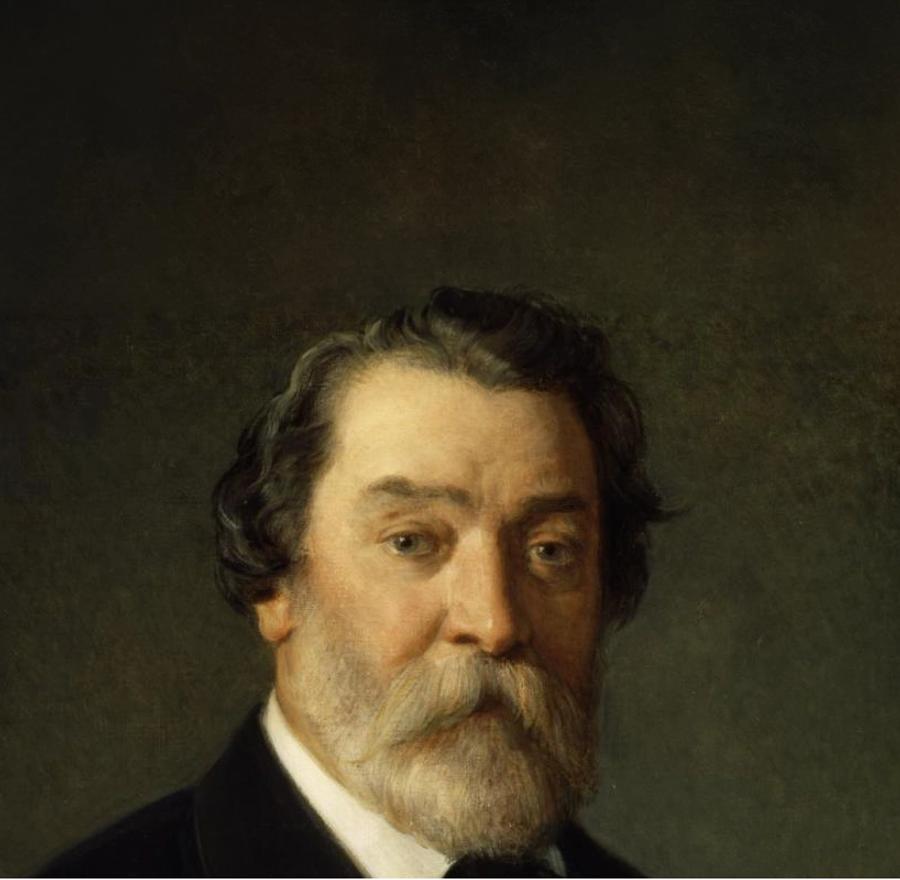
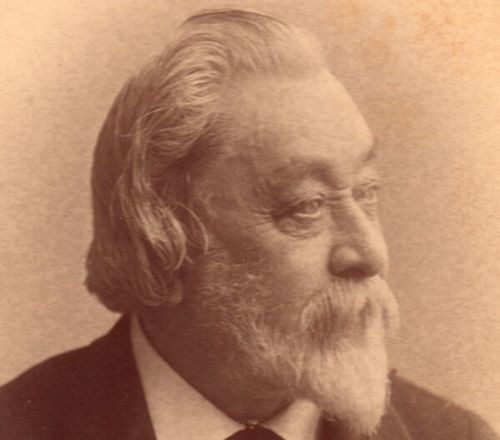
Theophil Edvard von Hansen arrived in Athens in 1837 at the age of twenty-three. Greece had been independent for six years. The city that would become its capital was still finding its form — a modest settlement of a few thousand people living among ruins that the rest of the world had been travelling to study for centuries. King Otto had summoned architects from across Europe to build the infrastructure of a modern nation-state, and Hansen came.
“If you want to read Athens in stone, you are reading Hansen. If you want to read Vienna on the boulevard, you are reading him there too.”
He stayed for eight years. That decision shaped everything that followed, for him and for the city. He spent those years in direct contact with the ancient buildings — not studying them from drawings or casts, as most European architects did, but walking among them, measuring them, understanding how light fell across Pentelic marble at different hours, how Doric columns tapered, how the polychrome paint that archaeologists were beginning to discover changed the way ancient Greek architecture had actually looked. He studied Byzantine architecture alongside classical Greek forms with equal seriousness, and the overlap between those two traditions — the ornamental richness of the one, the structural precision of the other — became the foundation of his mature language.
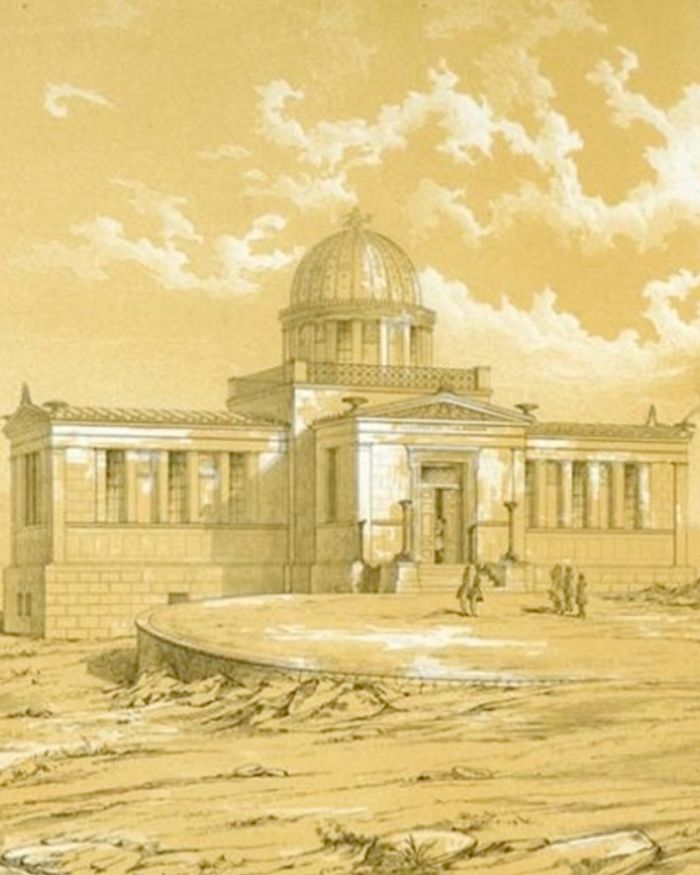
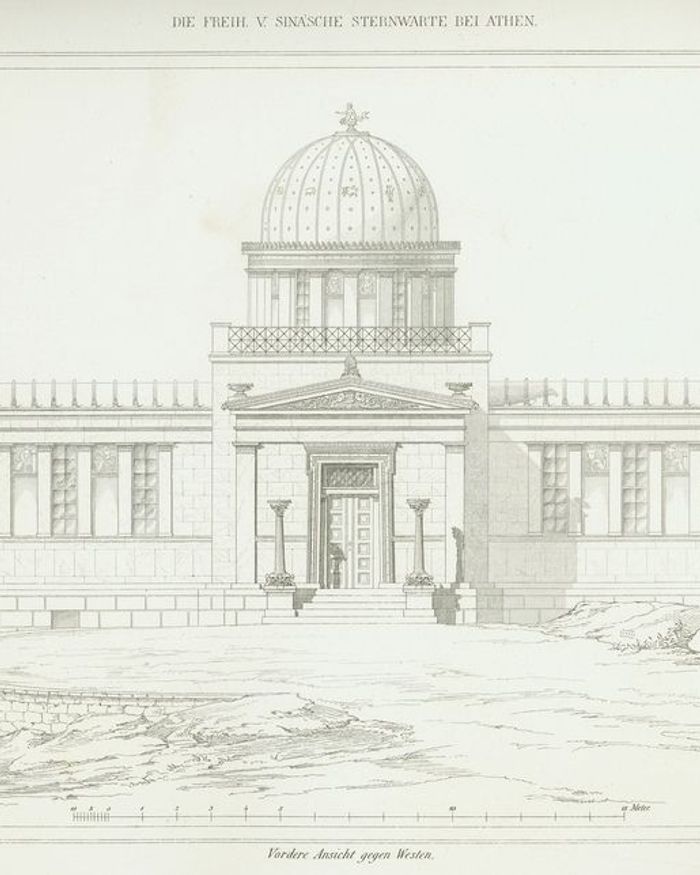
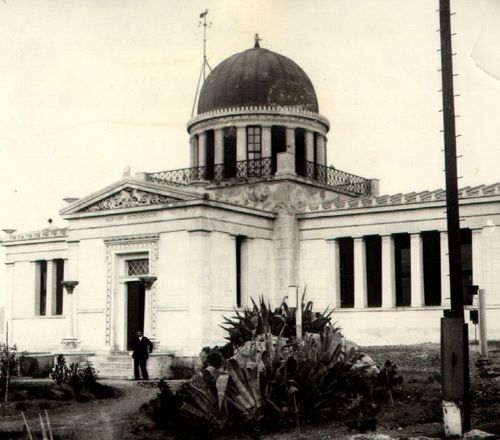
His first Athens building was the National Observatory (1842), on the Hill of the Nymphs west of the Acropolis. A Doric structure in Pentelic marble on a site chosen for its commanding view of both the city and the sky: precise, spare, exactly what it needed to be. The same year he designed the Dimitriou mansion on Syntagma Square in the Greek Revival manner — the building that became, after several transformations, the Hotel Grande Bretagne, still the most important address on the square. He also supervised the restoration of the Monument of Lysicrates in Plaka, the fourth-century BC choragic monument that is among the best-preserved ancient structures in the city.
The Academy of Athens, designed from 1856, is his most formally complete commission: Ionic colonnades in academically correct proportion, gilded statues of Athena and Apollo rising from their columns, polychromatic sculpture by Leonidas Drosis applied with a rigour informed by archaeological research rather than convention. The colours are not decoration — they are a reconstruction of how ancient Greek public buildings actually appeared. Vivid, specific, argued. He worked with Austrian sculptor Vincenz Pilz and artist Carl Rahl, and the result is one of the most complete neoclassical building programmes in Europe, which happens to sit on a street in the centre of Athens.
The National Library of Greece completed the Athenian Trilogy — the three contiguous buildings on Panepistimiou Street that define what a modern Greek capital looks like. Hansen designed it from 1888, at the age of seventy-five. Construction began that year. He died in Vienna in 1891. The building was completed in 1902 by others, eleven years after he was gone. It is the most stripped-back of his three Athens commissions, the most purely Doric, the one that comes closest to the ancient sources he had spent eight years studying on the ground. He never saw it finished.
Hansen left Athens in 1846, called to Vienna by the Greek-Austrian entrepreneur Georgios Sinas, and built a second career there that made him one of the defining architects of the Ringstrasse. Vienna gave him titles and monuments. Athens gave him something harder to name: the eight years of direct contact with ancient architecture that made everything else possible. The Academy, the National Library, and the Observatory are what those years produced when they finally came back to the city that taught him. That exchange has never been fully settled, which is perhaps why both cities still feel his presence so clearly.