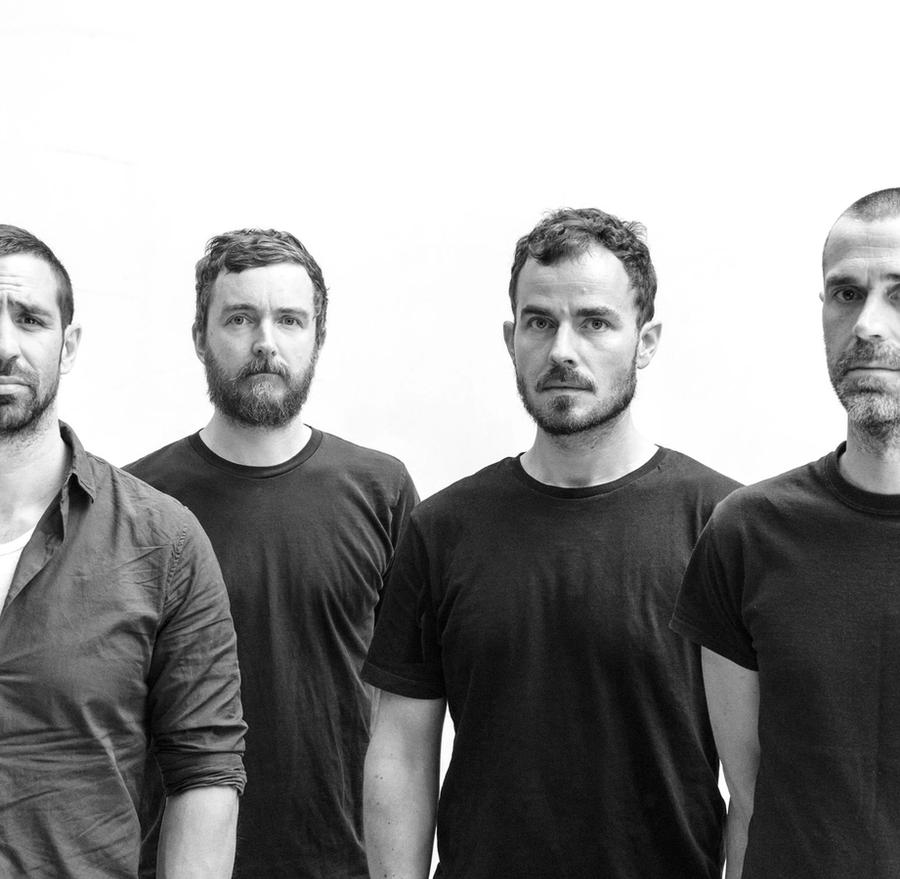
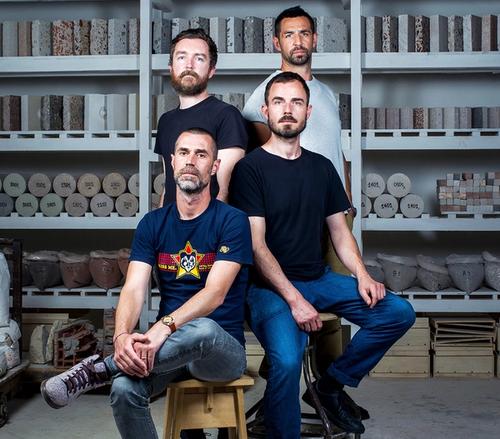
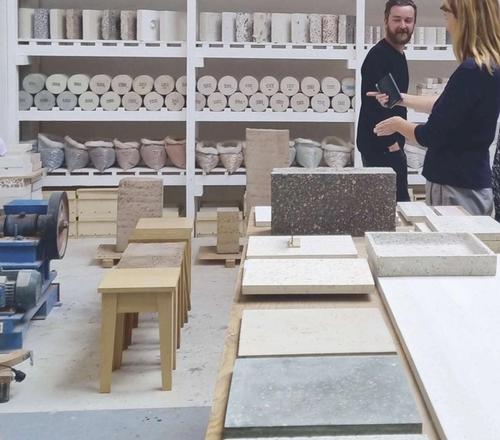
Ciguë arrived in Athens with a commission that most studios don’t get handed: a 1972 brutalist building on the Glyfada beachfront, abandoned in its original form, available to be restored. The former Fenix Hotel — 120 rooms, a façade of distinctive cubic cantilevered balconies, a structure that had been incrementally compromised by modifications added through the 1980s and 1990s — was the raw material. The brief was to turn it into Ace Hotel & Swim Club Athens, the brand’s first Greek address.
“Our aim was to celebrate and revitalize the existing brutalist structure by transforming it into a timeless landmark in Glyfada. — Alphonse Sarthout, founding partner”
The Paris studio’s first decision in Athens was to remove things rather than add them. The 1980s and 1990s modifications came off. What was revealed underneath was the original geometric purity of a building that had always been good and had been obscured. Working with architect of record Georges Batzios, Ciguë then rebuilt from that restored baseline — a process the studio describes as celebrating what the building already was before asking what it could become.

Their north star for the Athens project was Aris Konstantinidis, the Greek architect whose post-war modernist designs achieved a poetic alignment between structure and specific landscape. His Anavyssos summer residence on the Riviera — modest, precise, embedded in its coastal setting — was the standard against which every decision in Glyfada was measured. The question was always whether a material choice, a furniture selection, a lighting specification belonged to this coast and this building, rather than to a generic hospitality language.
The palette that emerged is earthy and restrained: white and travertine tones, woven rugs, shell-coloured walls, timber, ceramic lighting. Local materials throughout. The ground floor was opened into a continuous public space — lobby flowing directly to pool deck — with the swim club designed to function as a destination for Glyfada residents as much as for hotel guests. A four-storey façade mural by Athens-based French artist Claire Manent, referencing David Hockney’s poolside paintings, animates the exterior without touching the brutalist structure underneath it.
The art programme inside drew from Athens specifically. James Fuller, Eleni Psyllaki, and Alexandra Masmanidi contributed works. A tapestry by The Callas hangs in the lobby. Custom bed covers were made by Greek-Egyptian designer Salma Barakat; throw pillows by local Athenian weavers. Signage and wayfinding by Athens studio Ogust drew on Athenian street tags and graffiti, with a custom typeface running across travertine fragments, aluminium plaques, and embroidered linen — the city’s visual vernacular made hotel infrastructure.
The result is a building that reads as Athenian. Not as a Paris studio’s interpretation of Athens, but as a place that was made in conversation with the city’s own architects, artists, designers, and design history. Designboom, Dezeen, Yatzer, and Yellowtrace all covered the opening. Ciguë left Athens with a Greek partner in Georges Batzios and a project that will be part of the Riviera’s architectural record for decades.