Karamanlidika tou Fani.
An Anatolian deli where the counter becomes the menu.
Edited by Aki Sumawaki
Deli & Meze
Since 2014
Deli counter and meze room
~3 min walk to Psyrri Square
~6 min to Monastiraki Square
Fanis Theodoropoulos, of the family behind the Arapian pastourma shop, runs a deli and meze house in one: beef pastourma, soutzouk and kavourmas from a small producer in Drama, sliced at the counter and served at the table. Come for a long lunch after the central market, with tsipouro.
The Karamanlides were Greek Orthodox Christians from central Anatolia, from Cappadocia and the lands the Ottomans called Karamania. They spoke Turkish and wrote it in Greek letters, a script known as Karamanlidika. Their kitchen was built for hard winters and long roads: beef cured under a crust of fenugreek and spice, sausages heavy with cumin and garlic, yoghurt with nearly everything. When the population exchange of the 1920s moved them west, the recipes travelled with them. Athens has eaten this food ever since, but rarely with as much care as on this corner.
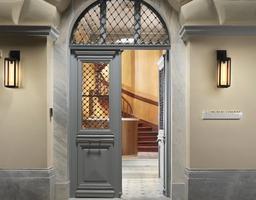
Fanis Theodoropoulos grew up in the trade. His family is behind Arapian, the old pastourma shop on Evripidou, just across the road, and for years its customers asked the same question: where can we sit down, have a drink and taste all this? His answer was to restore a neoclassical building on the corner of Sokratous and Evripidou and turn it into a deli and a meze house at once.
It's about quality over quantity and keeping prices honest.
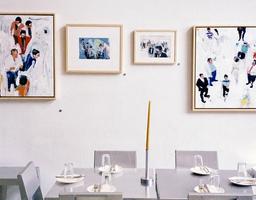
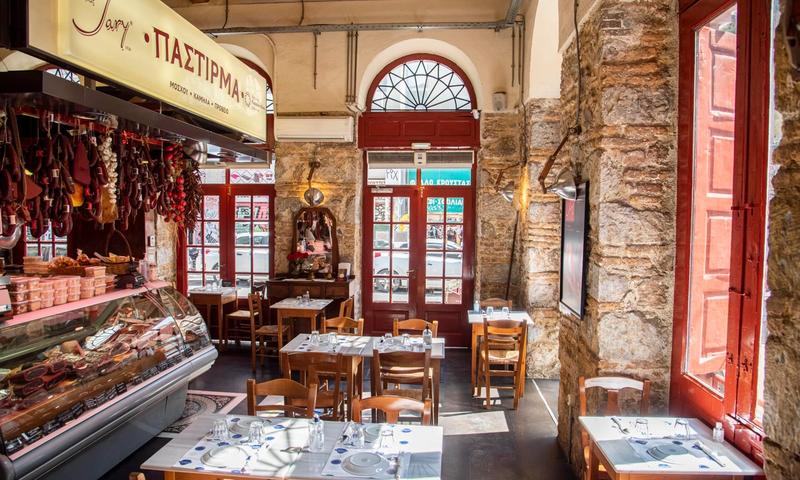
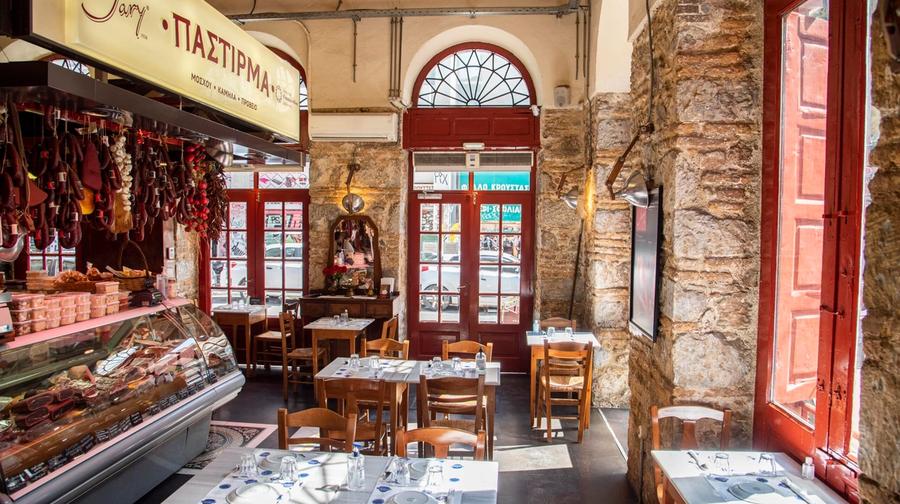
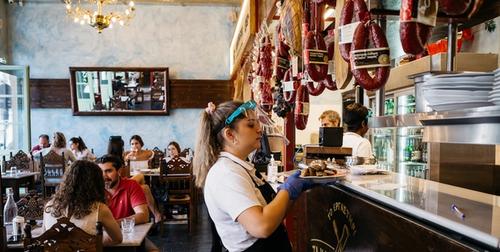
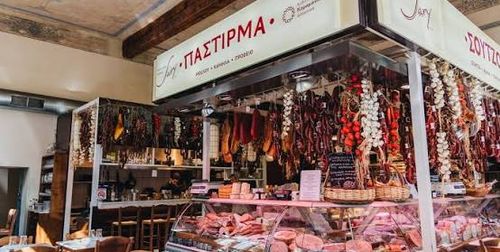
The format is the point. One side of the room is a long counter hung with cured sausages and stacked with cheese, the other is tables, and the line between them is thin: anything in the cases can be sliced onto your plate. Most of the cured meat comes from Paraskevas Sarimpogias, whose Sary workshop in Drama, in eastern Macedonia, makes the beef pastourma, soutzouk and kavourmas that anchor the menu. The cheeses come from small Greek producers, and the shelves carry jars and bottles to take home.
Start at the counter. A plate of pastourma, sliced thin, is the reason the house exists, and it tells you more about Karamanli cooking than any menu note. Then move to the hot meze: pastourma pies, saganaki with pastourma, Constantinople-style soutzouk, kavourmas, and vine-leaf dolmades. Some of the meze are mild and some are properly spicy, so ask which is which before you order three of the hot ones at once.
Drink tsipouro. It is what this food was made to go with, and the list stays Greek: tsipouro and raki, Greek wines, Greek craft beer. Lunch is the right hour, when the counter is at full strength. Behind the shop there is a courtyard that stays open through the winter, the place to stretch a meal into the afternoon.
The setting does half the work. The Varvakeios central market is a short walk away, and Evripidou is the city's spice street, still lined with herb sellers and old grocers. Spend the morning in the market halls, then come here with whatever appetite is left. It is the most natural lunch in that part of town, and one of the few where the food on the plate and the street outside tell the same story.
The house has grown since: there is now a restaurant on Ermou and a pastourma shop further along Evripidou. The corner of Sokratous is where it began. If you only have time for one, make it this one: counter, kitchen and tables still share a single room here, and that was the whole idea.
Why we picked it
Plenty of Athens tavernas put pastourma on the menu; here it is the whole point, and the counter does the ordering for you. It turns a market lunch into a lesson in Anatolian Greek cooking without ever feeling like one.
Best forA long meze lunch after the central market