Pangrati
Cine Oasis.
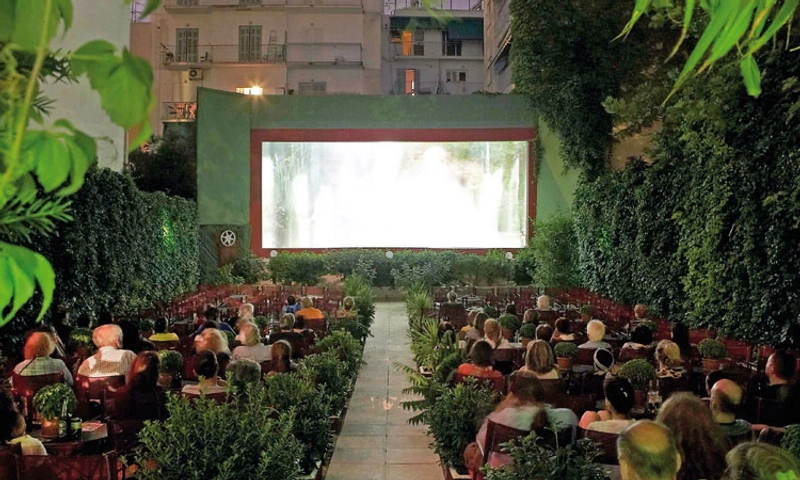
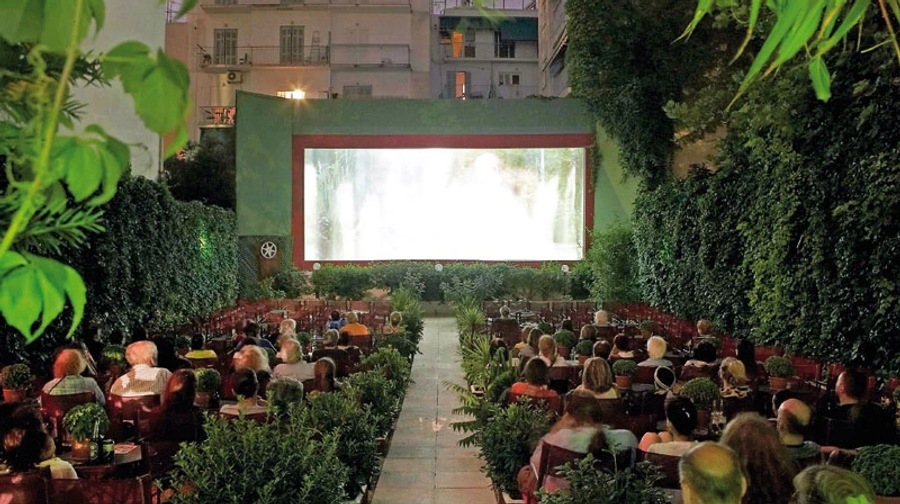
Pangrati's cinephile garden. Open under the sky since the 1950s.
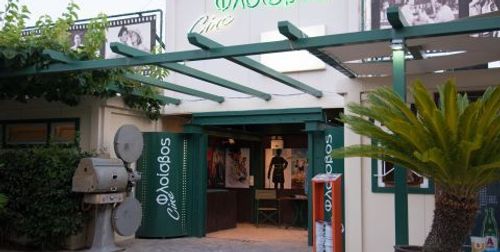
Cine Oasis opened around 1950 as a shadow theatre on Pratinou Street in Pangrati. Bought by filmmaker Vangelis Melissinos, who converted it to cinema. Since the 1980s run by sisters Dia and Maria, dedicated exclusively to cinephile programming. Featured in Le Monde, The Times of London, and American publications. One of Athens' most characterful outdoor screens.
Cine Oasis began life around 1950 as a shadow theatre — a Karagiozis venue on Pratinou Street in Pangrati, in the kind of neighbourhood that has always had more residents than tourists. It was bought by the producer and filmmaker Vangelis Melissinos, who converted the space into a cinema and gave it the name. In the 1980s, sisters Dia and Maria acquired it from him and made a decision that has defined the place ever since: from that point on, Oasis would screen only films worth seeing.
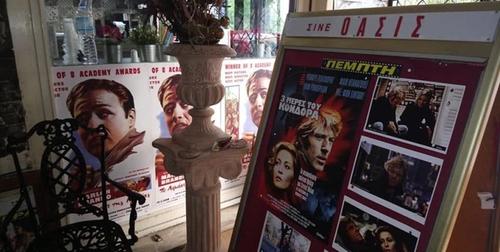
The programming that followed earned it international attention. Le Monde wrote about it. The Times of London wrote about it. American publications wrote about it. Hitchcock retrospectives, tributes to Jean-Luc Godard, screenings of In the Mood for Love, experimental Japanese cinema. Alongside the newer outdoor cinemas built for comfort and volume, Cine Oasis has stayed exactly what it always was: a garden with a screen, serious about what it shows, and honest about what it costs. Tickets remain among the cheapest in Athens, with discounts for students, the elderly and the unemployed.
Pratinou Street, Pangrati. Exclusively cinephile programming, under an open sky, since the 1950s.
The format is unchanged. Two screenings nightly at 21:00 and 23:00 through the summer months. A small canteen. Chairs arranged in front of a screen surrounded by greenery. The films are not dubbed — Greek subtitles only — which is part of the contract with the audience. If you are in Pangrati on a warm evening and you need somewhere to be, this is a reliable answer.
1950
Year